As Japanese rainy season approaches — known as tsuyu (梅雨), literally “plum rain” — it also marks the time when ume, or Japanese plums, ripen. It’s no coincidence that the characters for “plum” (梅) and “rain” (雨) come together in the name of this season. This is the traditional time for making umeboshi — Japan’s iconic preserved plums.
These small, wrinkled, powerfully salty and sour plums are a staple of Japanese cuisine. Though often misunderstood as a type of fermented food, umeboshi are in fact preserved through salting and drying — a method that has sustained Japanese households for centuries.
What Exactly Are Umeboshi?
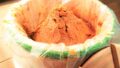
Umeboshi are made from fresh ume fruit, which resemble plums but are more closely related to apricots. The fruits are picked in early summer while still firm and green, then soaked to remove bitterness, heavily salted, and weighted down.
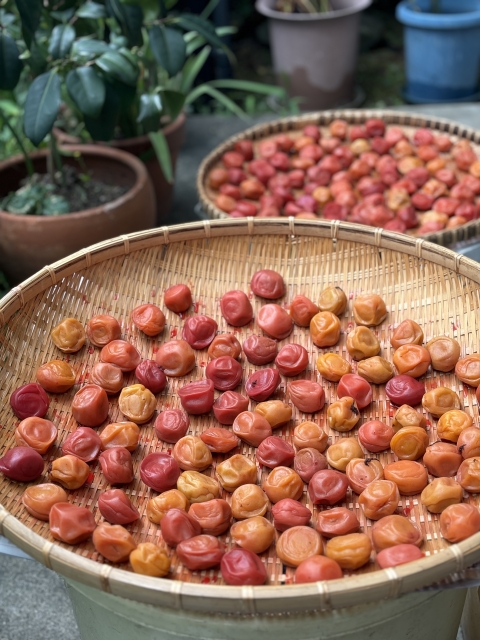
Over the course of a few weeks, salt draws out moisture from the fruit, creating a briny liquid called umezu (plum vinegar), which also helps preserve the plums. Once the rainy season passes and the sun returns, the plums are laid out to dry for couple days — traditionally during the “doyo no ushi no hi (土用の丑の日)” period in mid-summer.
Some people also add red shiso leaves during the process to impart a lovely reddish hue and extra fragrance.
This method doesn’t rely on microbial fermentation, but rather on salt and time. The result is a naturally preserved food that can last for years — and still retain its powerful flavor and healthful properties.
Why Are Umeboshi So Loved in Japan?
Umeboshi have been valued for centuries not just for their taste, but for their many uses and benefits:
- They act as a natural preservative, often placed in rice balls (onigiri) to keep rice fresh longer.
- Their strong sourness stimulates appetite, especially in hot, humid weather.
- In folk medicine, they’re believed to help with digestion, fatigue, and even hangovers.
- Just one umeboshi can flavor a whole meal!
Umeboshi are especially nostalgic for many people in Japan. They often appear in bento lunch boxes, atop bowls of white rice like a red dot in the center — evoking the Japanese flag. We call such bento “Hinomaru bento (日の丸弁当)”.
A Cultural Tradition, Not Just a Recipe
Making umeboshi at home is a tradition passed down through generations. It’s not only about food, but about slowing down and embracing the rhythm of the seasons. In the past, every household had its own jar of pickled plums tucked away in a cool, dark corner, quietly aging over the years. It is almost like whisky, the more aged it is, more rare and valued.
This custom reflects a deep respect for preservation, seasonality, and resourcefulness — all core values of traditional Japanese food culture.
This Year…
To be honest, I’ve never made umeboshi before. But after learning about its role in Japanese history, its connection to the rainy season, and its deep roots in home life, I’m inspired to give it a try this year.
As someone who loves seasonal food and traditional practices, umeboshi feels like the perfect entry point into the world of Japanese home preservation. I’ll be documenting my attempt right here on this blog — whether it turns out beautifully… or turns a bit too salty!