When I lived in Scotland, I was thrilled to see Scottish food and ingredients in supermarkets. But I had no clue what to do with them!
I eventually got to know some like haggis, oatmeal, mussels and so on, but I wish I knew more.
So if you have just arrived in Japan, and have no idea what to buy in supermarkets, this is for you!
My first theme is tofu.
You might already know about this great food, but in Japan, you will be amazed by the variety!
Tofu basics
Tofu is described as “soy bean curd”. High in protein, vegetarian-friendly, and very cheap (in Japan, at least).
A very very simplified description of tofu-making is as follows; soy bean is mixed with water to create soy milk. Then the nigari (magnesium chloride) is mixed to solidify.
Tofu can be divided into 2 groups; kinu (meaning ‘silk’) and momen (meaning ‘cotton’).
Momen is more dense, you crush kinu tofu once, and dehydrate again to make them. Kinu is smoother, and lighter in taste.
How to eat Tofu
Eat it as it is
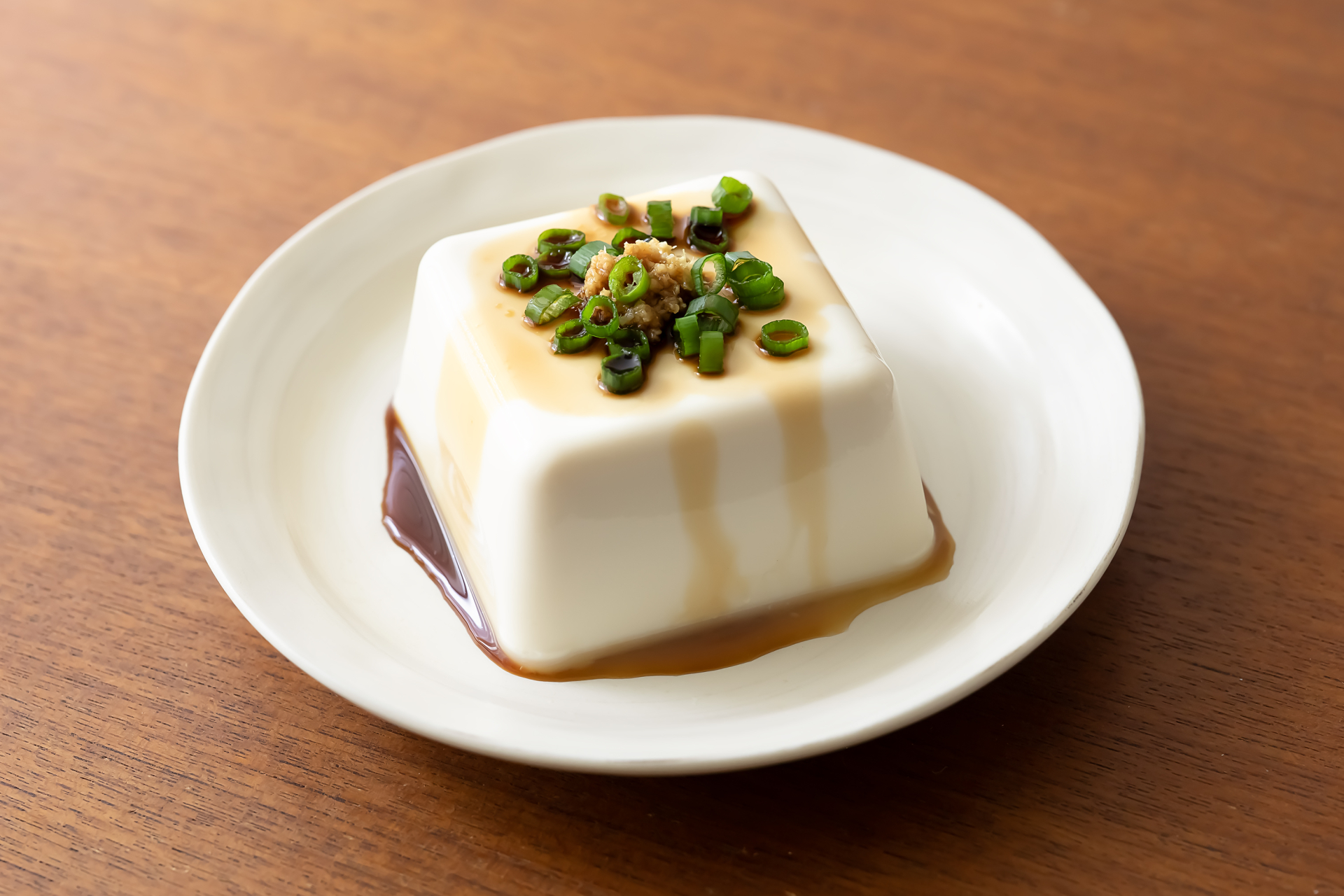
The easiest way to eat is by itself, as it is. A few drops of soy sauce (shoyu) is enough to enjoy the soft taste of soy beans; it’s called ‘Hiya-yakko’.
Some like to add grated ginger, shaved bonito flakes (Katsuo-bushi), kimchi, and so on. Tofu is great to top-up your salad, too. You can arrange them as you like. Tofu is like blank canvas and it doesn’t have much taste by itself.
Put them in soup
Tofu is one of my favorite things to put in my miso soup (miso-shiru). You can cut them nicely into cubes, or you can crush them with spoon (like I do!).
They come nicely in Korean and Chinese soup, too. Hot Korean soup with tofu is great for chilly days, and tofu can be found in numbers of Chinese dishes as well.
Use them in cooking
Tofu is a very versatile product. It can be crushed, drained, dried, fried, baked… they come in many forms!
I like to put some tofu in hamburger steak to reduce amount of minced meat I use. Less fat, less calories but more fluffiness. If you google 「豆腐 レシピ お菓子」, you will find numerous recipes that use tofu as all kinds of substitutes, for like cream and cream cheese. I bet Japanese people are the people with the most curiosity for food and appetite.
Abura-age (literally means ‘fried with oil’) is another form of tofu. They are usually beside tofu in supermarket shelves, and they are my favorite to put in misoshiru alongside with tofu. I know putting both tofu and abura-age in miso soup is like eating soy bean and soy bean in soy bean soup, but they are great. Trust me.
But you shouldn’t try making abura-age at home with tofu bought from supermarket. Tofu for abura-age is the special kind, so frying regular tofu will not turn out as expected abura-age.
Where to find tofu
You can find them in chilled sections of supermarkets and convenience stores, which means almost anywhere, 24/7. I found room temperature tofu in Scotland, which comes in paper cartons, but I’ve never seen them in Japan, so be sure to look around the chilled shelves.
Speciality tofu stores are declining in number, and they are hard to find these days.
When I was little, tofu cart would come every Wednesday near my neighborhood, and the old man plays the horn-like instrument to let people know that he’s here. My mom would send me with a pot or a bowl to carry tofu, they didn’t have bags! If you find this kind of traditional tofu merchants, you are lucky!
Tofu isn’t just for vegetarians. It’s fun to compare different kinds of tofu, starting with kinu and momen, to find your favorite. Even if you have had some tofu before outside of Japan, do try ours, they are the best!!