It’s been too long since my first umeboshi blog post!
My umeboshi journey continued, and it went pretty well!!
I had so much going on during the summer and autumn, but my umeboshi kept on developing on their own. I guess that’s best part of this slow process.
Drying process
Ume (Japanese plums) were salted in Tsuyu (rainy season, mainly in June).
After a month and a half, Umezu came out and looked like this. Umezu sounds like it’s vinegar, but it’s not. It’s salt and water from ume mixed.
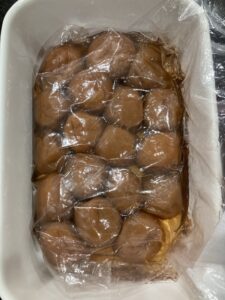
When you look at the word “umeboshi”, it is ume + boshi(hoshi). It literally means “dried plums”. Looks obvious you have to dry this.
You would want to look closely for weather forecast, until after “Tsuyuake”, which is end of tsuyu because that’s when it’s suitable for drying your plums. 3 sunny days in a row would be perfect.
Another way of determining when to dry is to wait until “Doyo-no-hi (day of Doyo)”. We have tradition of eating eels on Doyo-no-hi, which is usually around mid-July and super hot. Tsuyu is usually over around that time of the year.
For my first try, I decided to wait until Doyo-no-hi.
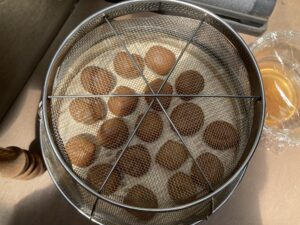
I placed all of my ume on a bamboo tray, and covered it up with a colander to prevent bugs.
I flipped them once a day, and took them in after sunset, continued for 3 days.
Umeboshi is ready!!
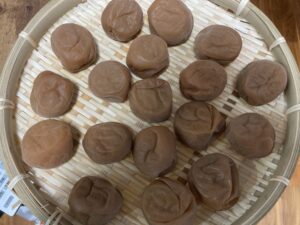
This is how it looked after 3 days of drying! Looks wrinkly, and smells sweet.
You can now try them, but beware, they are very very salty.
I read that I should let them mature for at least six months, so I put them in a glass bottle for preservation.
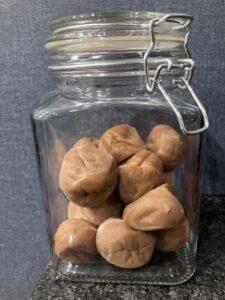
Umeboshi itself is very high in salt, so it’s very rare that unwanted germs or bacteria can survive around them (which also means you would not want to decrease the amount of salt for the sake of preserving).
The longer the umeboshi is preserved, the more expensive they tend to be. Specialty umeboshi shops sometimes sell 3-year-old umeboshi, 5-year-old, or even longer.
Home-made umeboshi (mine was 20%) tend to be higher in salt content for lack of preservatives, but if you want to try milder umeboshi, go to supermarkets and look for 8%~10% salt umeboshi or honey(hachimitsu) flavored ones.
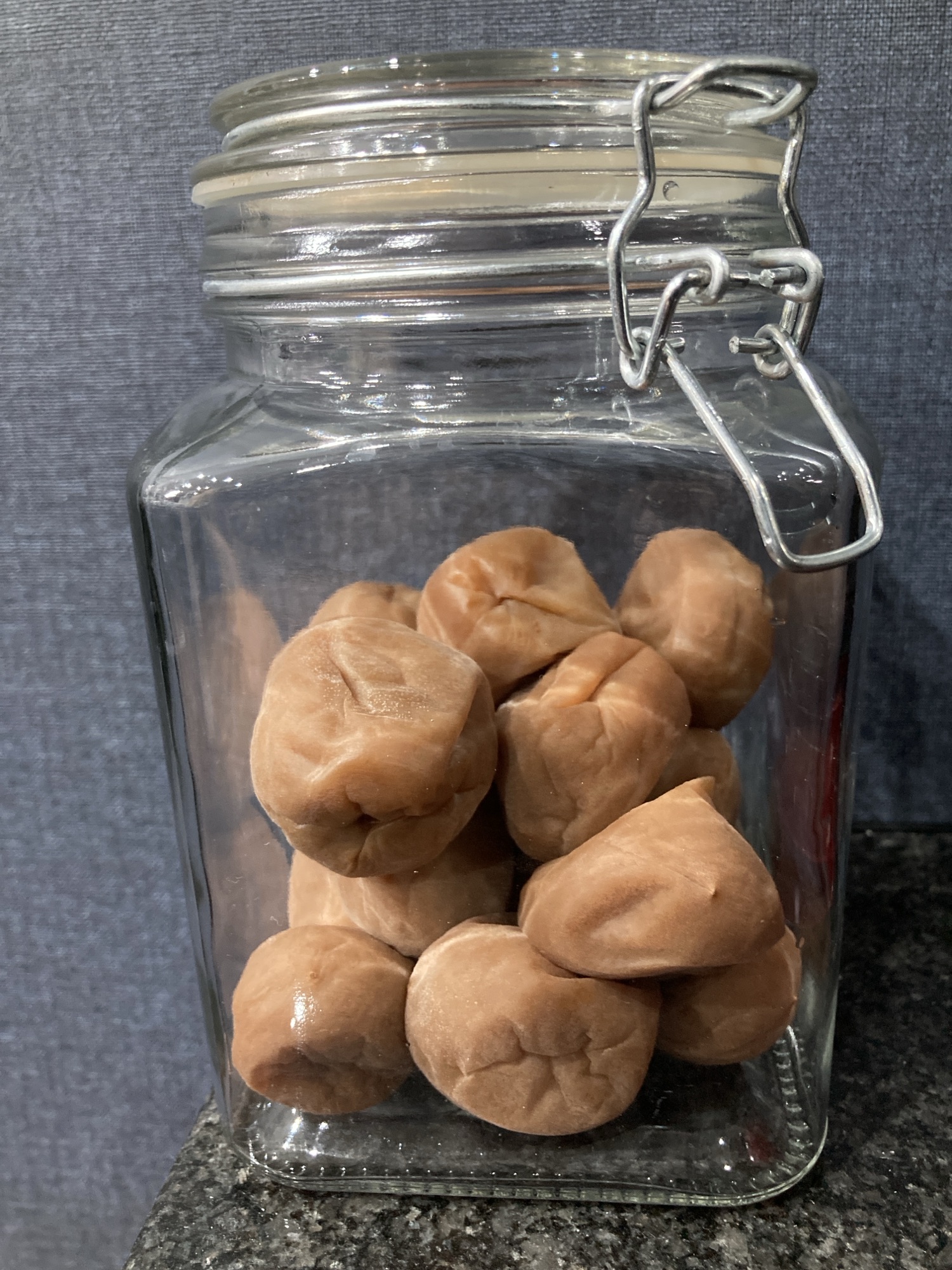
After 7 months of maturing, my umeboshi jar looks like this.
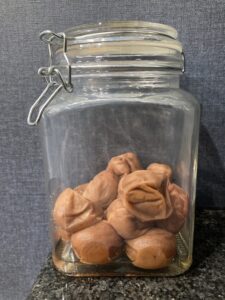
They have significantly shrunk (3 umeboshi are eaten up though)!
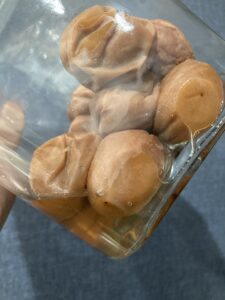
If you look closely, you would notice liquid inside, which is called Umemitsu (plum sirup).
I used some umeboshi to cook with sardines, they go great together. I picked one recipe online, followed the instructions…. and the result was way too salty. I needed lots of rice to go with it!
Umeboshi is good to eat by itself (mainly with white rice), but they are also great for cooking. However, most recipes don’t assume 20% salt umeboshi, so when you try, just be careful with that.
I wonder how many years my first umeboshi will survive, I mean how long I can resist, and how long the salt will protect them from bacteria.
This year, following my triumph, I’m going to increase the amount of ume I’ll buy in June!